
You can see this convention in films, advertising, fashion photography, romance novels, celebrity photography, and even wedding portraits.
A taller man and shorter woman can be presented as visually “balanced” according to traditional expectations.
But real people don’t always fit those proportions.
Couples come in every possible combination of heights.
Some women are taller than their partners.
Some couples are almost exactly the same height.
Others have a large natural difference.
Photography can either reveal those differences or minimize them.
That’s why Wade’s analysis of Charles and Diana is interesting: it treats royal photographs not merely as snapshots, but as images created within a particular social and cultural environment.
The Importance of Royal Image-Making
The British royal family has historically paid close attention to public presentation.
Official portraits, public appearances, ceremonies, and major events are highly visible.
Photographers and media organizations are constantly capturing images of members of the royal family.
That doesn’t necessarily mean every photograph is carefully manipulated or that every pose has a hidden message.
Many photographs are simply spontaneous moments.
But in formal settings, positioning is naturally part of photography.
People are placed where they need to stand.
They may use stairs or platforms.
They may sit while others stand.
They may arrange themselves according to protocol, available space, or the requirements of the photographer.
These ordinary choices can have an enormous effect on the final image.
A Photograph Can Tell the Truth—And Still Mislead the Eye
This is perhaps the most interesting lesson from the Charles and Diana height mystery.
The photograph itself isn’t necessarily false.
Charles really was standing.
Diana really was beside him.
The camera genuinely captured the scene.
Yet the resulting image can still create a misleading impression.
That’s because photographs freeze only one moment from one perspective.
Imagine taking a picture of two people on a staircase.
One person stands two steps higher.
The other stands below.
The resulting photograph could make their height difference appear enormous.
Move them onto level ground, and suddenly they might look almost identical in height.
Nothing about either person’s body has changed.
Only their position has changed.
The Same Principle Applies to the Younger Generation
The comparison becomes particularly interesting when looking at photographs of the next generation of the royal family.
Prince William is commonly reported to be around 6 feet 3 inches, while Catherine, Princess of Wales, is often reported at approximately 5 feet 9 inches.
Unlike Charles and Diana, they have a genuine height difference.
Yet even that difference can appear larger or smaller depending on their shoes, posture, positioning, and surroundings.
A photograph can make two people who have a clear height difference appear surprisingly close in height.
Another image can make the difference look much more dramatic.
Again, the camera isn’t changing their actual height.
It’s changing our perception of it.
Why Diana’s Images Continue to Fascinate People
Diana’s photographs remain especially compelling because her public image changed dramatically throughout her life.
Early photographs show a young woman entering an extraordinary world of royal ceremonies, formal appearances, and intense media attention.
Later images show a woman with a much stronger public identity and a different relationship with the press and the public.
Photographs from different periods therefore invite people to look for subtle changes—not only in clothing and hairstyle, but also in posture, confidence, relationships, and the way she was presented.
That’s part of the reason apparently minor details, such as height, can become subjects of fascination decades later.
The Internet Has Added a New Layer to the Story
In the social-media era, old photographs can suddenly become popular again.
A photograph that received little public discussion when it was originally taken can be reposted decades later and examined by millions of people.
One person notices something unusual.
Another person compares it with another photograph.
Someone creates a video.
Others share it.
And soon, a small visual detail becomes a widespread online discussion.
That’s what appears to have happened with the photographs showing Charles and Diana at different apparent heights.
The question isn’t necessarily whether the couple’s physical heights actually changed.
Obviously, they didn’t.
The more interesting question is:
Why does the camera sometimes make it look as though they did?
So, Was There Really a “Height Secret”?
There isn’t enough evidence to conclude that every photograph of Charles and Diana was deliberately staged to make Charles appear taller.
That’s an important distinction.
Some photographs may have been carefully arranged.
Others may simply reflect ordinary differences in posture, shoes, location, and perspective.
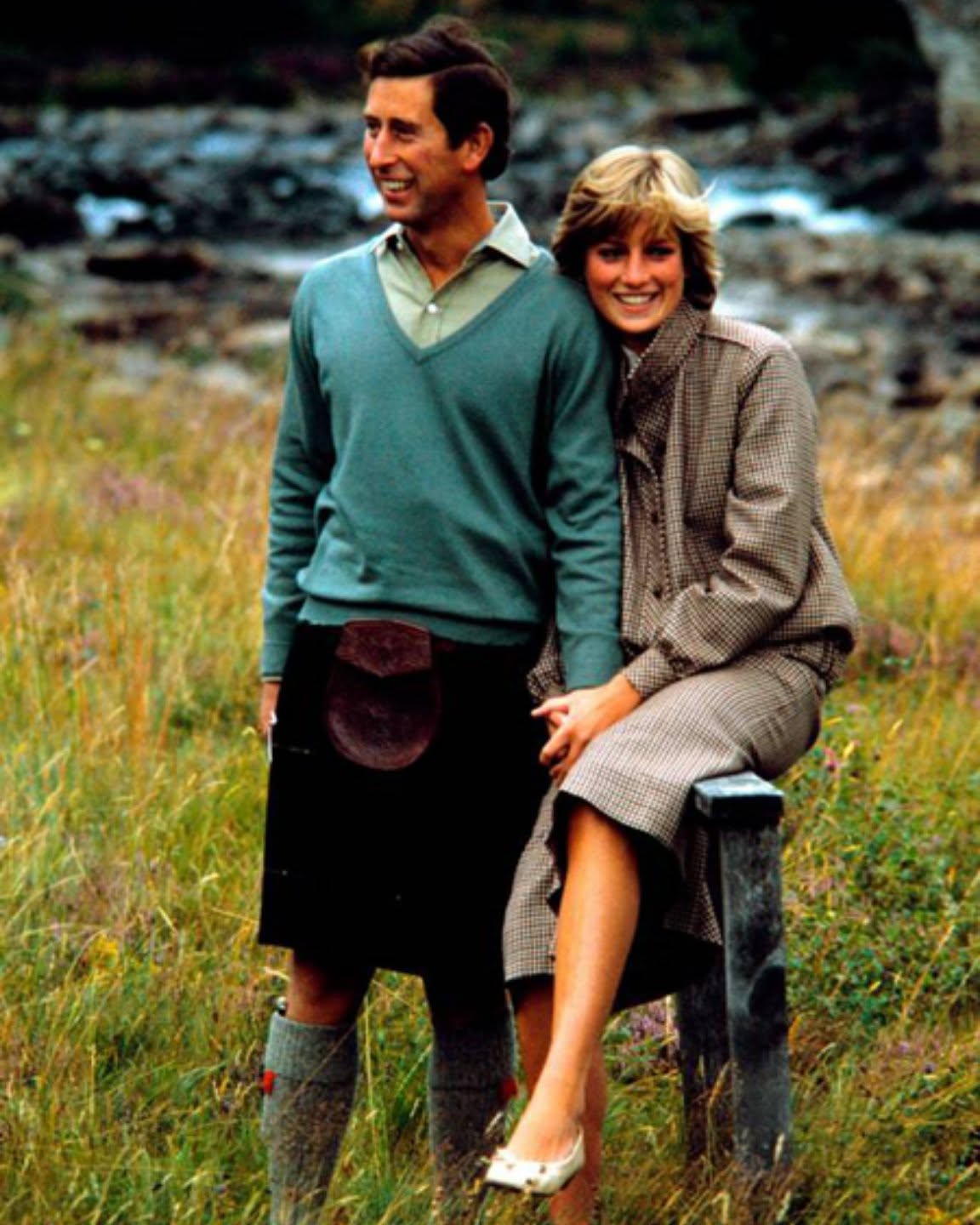
The Balmoral image provides a particularly straightforward example because Diana was sitting while Charles was standing.
Other photographs require more interpretation.
Sociologist Lisa Wade has argued that some images reflected broader cultural expectations about male height and masculinity, but that interpretation should be distinguished from the simpler photographic facts.
A photograph can be influenced by social conventions without proving that every photographer or royal official consciously intended to create a particular illusion.
The Fascinating Lesson Hidden in an Old Photograph
Perhaps the real mystery isn’t Charles or Diana at all.
It’s the photograph.
We tend to think of photographs as objective records.
But every photograph is shaped by choices:
Where people stand.
How they stand.
What they wear.
Where the camera is placed.
When the shutter is pressed.
Who is included in the frame.
And what is left outside it.
Those choices can subtly influence how we understand an event long after it happened.
The Balmoral photograph is a perfect example.
At first, it appears to show a newly married couple with a dramatic height difference.
Look more closely, and another explanation emerges.
Diana was sitting.
That single detail changes the entire image.
Final Thoughts
The apparent height difference between Charles and Diana has inspired plenty of speculation, but the photographs don’t necessarily reveal a hidden mystery.
In the famous Balmoral image, the most important detail is one that can easily be missed: Diana is sitting while Charles is standing.
Other photographs can look different because of shoes, posture, camera perspective, positioning, terrain, and the circumstances in which the pictures were taken.
At the same time, sociologist Lisa Wade’s analysis raises a broader question about how traditional expectations surrounding gender and height may have influenced the way couples were presented publicly.
The important point is not to assume that every photograph was deliberately manipulated.
Instead, these images show something much more universal:
Photography can shape perception.
A few centimeters of elevation from a bench or step can suddenly create a dramatic visual difference. A pair of different shoes can change proportions. A slight adjustment in posture can alter an entire composition.
And decades after Diana’s death, an ordinary photograph from Balmoral continues to remind us that sometimes the smallest details are the ones that change the story.
Before deciding what an old photograph proves, it may be worth taking a second look at what is happening just outside the obvious.
