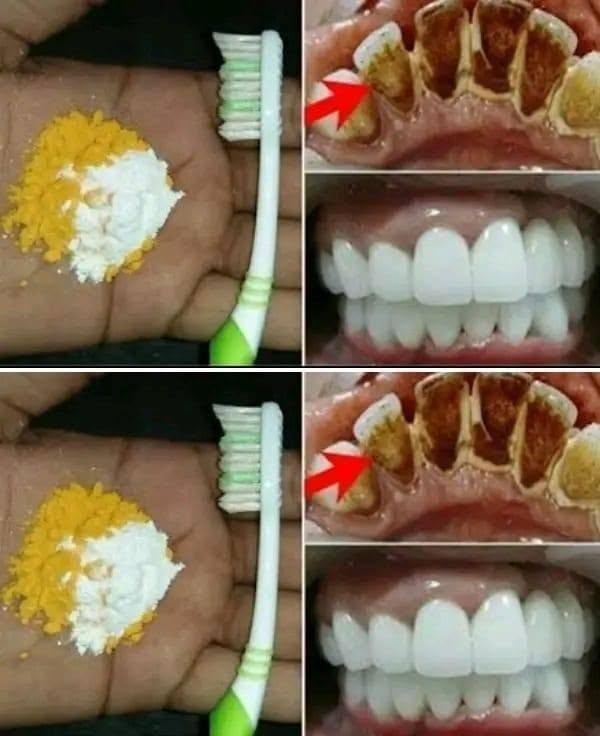
A bright smile is something many people want, and homemade teeth-whitening tricks often spread quickly online because they look cheap, fast, and easy.
The image you shared appears to show a DIY mixture being used with a toothbrush, alongside dramatic before-and-after teeth. But there is an important warning: **many homemade whitening mixtures can damage enamel or irritate gums if they are too abrasive or acidic**.
So instead of promising “white teeth in 2 minutes,” here is what is actually safer and more realistic.
Not all discoloration is on the surface. That matters because surface stains may respond to whitening products, while deeper discoloration may require professional treatment.
## 1. Baking Soda Can Remove Some Surface Stains
Baking soda is mildly abrasive, which means it can help scrub away some surface staining.
That is why it is included in some commercial toothpastes.
But using loose baking soda aggressively or too often is not necessarily better.
Excessive scrubbing can:
* Irritate gums
* Wear the tooth surface
* Increase sensitivity
* Make teeth look more yellow over time if enamel becomes thinner
### Safer approach
If you want to use baking soda, it is usually better to choose a toothpaste formulated with baking soda rather than making a harsh homemade paste.
## 2. Avoid Lemon Juice on Teeth
A lot of viral recipes combine baking soda with lemon.
That is not a good idea.
Lemon juice is acidic, and acid can soften and erode tooth enamel.
Once enamel is lost, it does not simply grow back.
Repeated use of acidic mixtures may lead to:
* Tooth sensitivity
* Rough enamel
* Increased staining
* Greater risk of decay
So even if the teeth look temporarily brighter, the long-term effect can be harmful.
## 3. Turmeric Is Not a Proven Teeth Whitener
The yellow powder in the image may resemble turmeric.
Turmeric is often promoted online as a natural whitening ingredient, but there is no strong evidence that brushing with turmeric produces meaningful whitening.
It can also stain toothbrushes, sinks, clothing, and sometimes dental materials.
It should not replace regular toothpaste.
## 4. Hydrogen Peroxide Can Whiten Teeth — But Concentration Matters
Hydrogen peroxide is a genuine whitening agent and is used in many commercial whitening products.
However, that does not mean stronger is better.
High concentrations or frequent use can cause:
* Gum irritation
* Tooth sensitivity
* Oral tissue burns
The safest approach is to use a professionally formulated whitening product according to the instructions rather than experimenting with concentrated peroxide at home.
## What Actually Works for Whitening Teeth?
There are several evidence-based options.
### Whitening Toothpaste
Whitening toothpastes mainly remove surface stains rather than changing the natural color deep inside the tooth.
They can be useful for stains from coffee, tea, or smoking.
### Whitening Strips
Over-the-counter whitening strips typically contain peroxide and can lighten teeth gradually over several days or weeks.
Follow the directions carefully.
Using them longer or more often than recommended does not necessarily produce better results and may increase sensitivity.
### Dentist-Supervised Whitening
Professional whitening can produce stronger and more predictable results.
A dentist can also check for:
* Cavities
* Gum disease
* Cracked teeth
* Exposed roots
* Existing sensitivity
before treatment.
That matters because whitening can worsen discomfort if underlying dental problems are present.
## Why “2-Minute Whitening” Claims Are Misleading
Real tooth whitening is usually not instantaneous.
A homemade mixture may temporarily remove:
* Plaque
* Food residue
* Surface stains
which can make teeth appear cleaner.
But changing the actual color of teeth generally takes repeated exposure to a whitening agent over time.
Dramatic before-and-after images online may also involve:
* Different lighting
* Photo editing
* Professional dental work
* Veneers
* Cleaning rather than whitening
So be cautious with claims promising a completely white smile after one brushing.
## What About Salt?
Salt is another common DIY ingredient.
While salt can have cleaning uses, rubbing coarse salt directly on teeth can be too abrasive.
Abrasive powders may scratch enamel and irritate gums.
There is no need to scrub your teeth with salt to keep them clean.
## What About Charcoal?
Activated charcoal toothpaste has become popular, but evidence for meaningful whitening is limited.
Some charcoal products can also be highly abrasive.
If a product is too abrasive, repeated use may wear enamel rather than improve tooth health.
## The Best Daily Routine for Whiter-Looking Teeth
The most effective long-term routine is surprisingly simple:
* Brush twice a day with fluoride toothpaste
* Floss or clean between teeth daily
* Limit frequent staining drinks
* Rinse with water after coffee or tea
* Avoid tobacco
* Attend regular dental cleanings
* Use approved whitening products when desired
Good oral hygiene removes the buildup that can make teeth look dull or yellow.
## How to Reduce Coffee and Tea Stains
You do not necessarily have to give up coffee or tea.
Try:
* Drinking water afterward
* Avoiding sipping slowly for hours
* Cleaning your teeth regularly
* Using a straw for some cold drinks
* Getting professional cleanings when needed
Wait a little before brushing immediately after highly acidic drinks because enamel may be temporarily softened.
## When Whitening Should Be Avoided
Talk to a dentist before whitening if you have:
* Sensitive teeth
* Gum disease
* Cavities
* Exposed tooth roots
* Cracked teeth
* Dental restorations in visible areas
Fillings, crowns, and veneers do not whiten the same way as natural teeth.
That can create uneven color.
## When Yellow Teeth Are Actually Normal
Teeth are not naturally bright white.
Healthy teeth can be:
* Ivory
* Cream-colored
* Light yellow
Dentin, the layer beneath enamel, naturally has a yellowish color.
So some yellow tone is completely normal and does not mean your teeth are dirty.
## The Bottom Line
Homemade mixtures involving **baking soda, lemon, turmeric, salt, or other kitchen ingredients** may look convincing online, but they are not all safe or effective.
Baking soda may help remove some surface stains, but acidic ingredients such as lemon can damage enamel, and dramatic “2-minute whitening” claims are unrealistic.
If you want noticeably whiter teeth, the safer choices are:
* Fluoride whitening toothpaste
* Properly formulated whitening strips
* Dentist-supervised whitening
The goal should be a brighter smile **without sacrificing enamel or gum health**.