
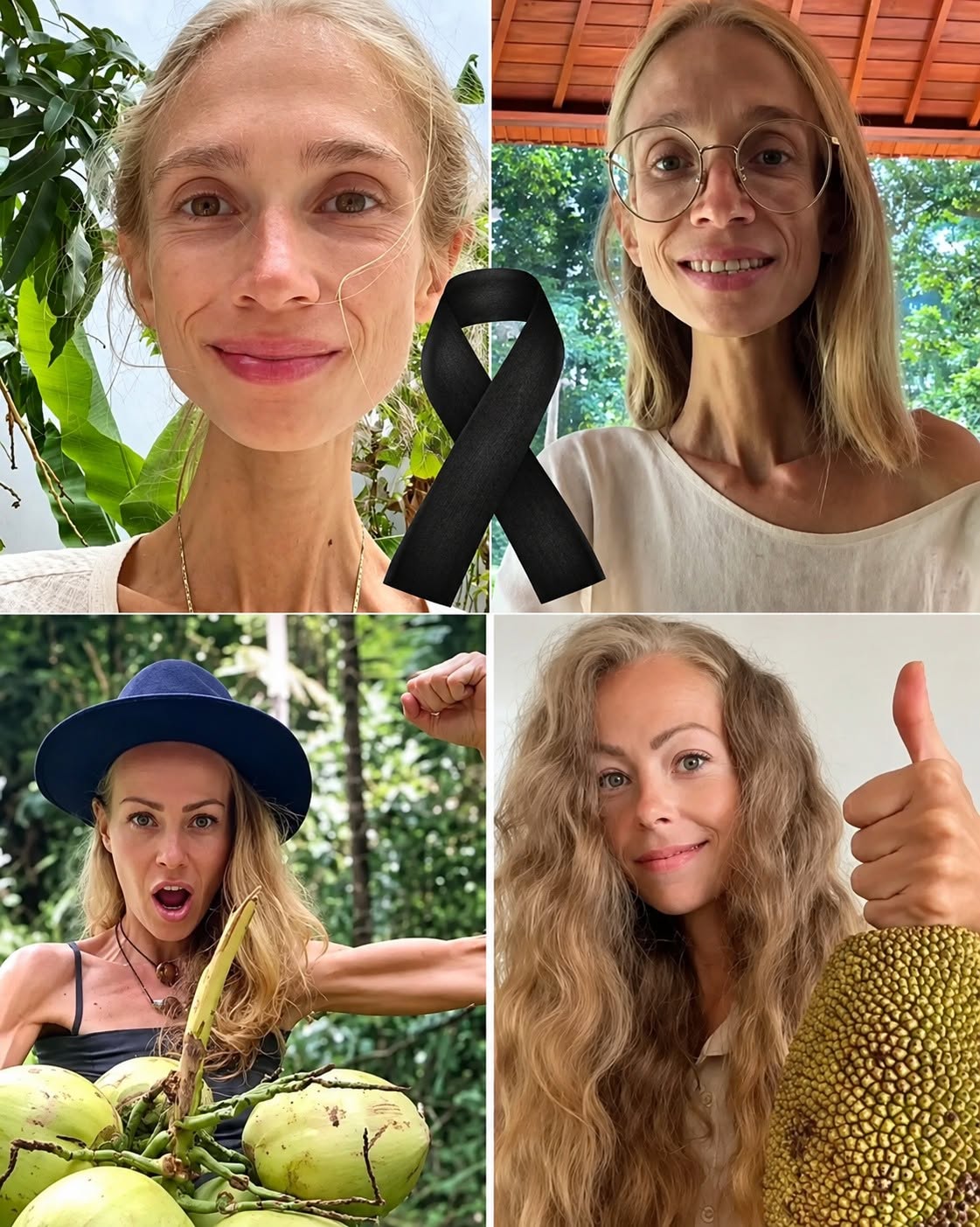
For a young dancer, the body can feel like both an instrument and a source of pressure.
Every rehearsal demands strength. Every performance requires stamina, balance, coordination, concentration, and recovery. Behind the elegance seen on stage is an enormous amount of physical work. Muscles must be fueled, bones must remain strong, the heart must continue working efficiently, and the brain needs enough energy to maintain focus.
That is why the story of a young dancer who reportedly adopted an extremely restrictive diet consisting almost entirely of fruit has drawn attention.
According to the account provided, what began as an attempt to follow a “clean,” natural, and supposedly pure lifestyle gradually became an increasingly dangerous pattern of restriction. Friends and fellow performers reportedly noticed dramatic changes in her body as her weight fell to around 22 kilograms. Despite concerns from people around her, she continued following the diet, apparently believing that eliminating other foods would help her become healthier.
The reported outcome was tragic.
Her story has since been presented as a warning about the dangers of extreme dietary restriction and the misconception that a food can be healthy simply because it is natural.
Fruit is undeniably nutritious. It provides water, carbohydrates, fiber, vitamins, minerals, and a variety of beneficial plant compounds. But fruit alone cannot reliably provide everything the human body requires over the long term.
The problem, therefore, isn’t fruit.
The problem is turning one food group into an entire diet.
And when extreme restriction is combined with intense physical training, rapid weight loss, and a belief that eating less is automatically healthier, the consequences can become serious.
This story should not be viewed as a spectacle or as a lesson in how much weight someone can lose. Its real value lies elsewhere: it illustrates how quickly a seemingly healthy idea can become dangerous when nutritional balance is replaced by rigid rules.
When “Healthy” Eating Becomes Extreme
The language surrounding food can sometimes make restrictive diets sound appealing.
Words such as “clean,” “pure,” “natural,” “detox,” and “free from toxins” can create the impression that certain foods are inherently virtuous while others are somehow harmful.
Fruit fits easily into this narrative.
It grows naturally. It contains vitamins and minerals. It provides fiber. It doesn’t require complicated preparation. Many varieties are naturally sweet and contain large amounts of water.
From those facts, someone might make a much larger—and incorrect—assumption:
If fruit is healthy, then eating only fruit must be even healthier.
Nutrition doesn’t work that way.
A healthy diet isn’t created simply by selecting one category of nutritious food and eliminating everything else.
The human body requires a range of nutrients that perform very different functions. Carbohydrates provide energy. Protein supplies amino acids needed to maintain and repair tissues. Dietary fats provide essential fatty acids and help with the absorption of certain vitamins. Minerals support bones, muscles, nerves, blood formation, and fluid balance. Vitamins participate in countless metabolic processes.
No single food group can reliably supply all of those needs in sufficient quantities.
That distinction becomes especially important when the person following the diet is also exercising intensely.
Fruit Provides Important Nutrients—but Not Everything
Fruit has an important place in a balanced diet.
Different fruits provide different nutrients, but many are good sources of:
Vitamin C
Fiber
Folate
Potassium
Water
Carbohydrates
Various antioxidants and plant compounds
Fruit can contribute to digestive health, hydration, and overall dietary quality.
But nutritional adequacy isn’t determined by asking whether a food contains some important nutrients.
The real question is:
Does the entire diet provide enough of all the nutrients the body needs?
An all-fruit diet presents obvious challenges.
Fruit generally doesn’t provide enough protein to meet the body’s needs, particularly when energy intake is also inadequate. It is also not a reliable source of vitamin B12, and it may fail to provide sufficient essential fats, iron, calcium, sodium, and other nutrients depending on what is consumed and in what quantities.
This matters because these nutrients aren’t optional.
Protein is necessary for muscles, enzymes, hormones, immune proteins, and tissue repair.
Essential fats are involved in cell membranes, brain function, and hormone-related processes.
Iron is needed to make hemoglobin, the protein that carries oxygen through the blood.
Calcium is essential for bones and also plays roles in muscle contraction and nerve signaling.
Vitamin B12 is important for blood formation and neurological function.
Sodium and other electrolytes are involved in fluid balance, nerve signaling, and muscle activity.
Removing foods that provide these nutrients without replacing them appropriately can gradually create deficiencies.
The Body Cannot Run on “Purity”
One of the most dangerous misconceptions associated with extreme diets is the idea that the body becomes healthier as more foods are eliminated.
In reality, the body isn’t looking for purity.
It is looking for adequate energy and nutrients.
A dancer can be eating foods that are individually nutritious and still be severely undernourished.
That may sound contradictory, but it isn’t.
Imagine someone eating only fruit throughout the day.
They might consume oranges, bananas, berries, apples, melons, grapes, and other fruits.
The diet could look colorful and wholesome.
There may be no fast food, no fried food, no candy, and no processed snacks.
From a photograph, it could even appear like the picture of perfect health.
But appearance doesn’t tell us whether the body is receiving enough protein, fat, minerals, calories, and other essential nutrients.
Food quality and food adequacy are not the same thing.
A diet can contain many healthy foods while still being nutritionally inadequate.
What Happens When the Body Doesn’t Get Enough Energy?
The human body needs energy continuously.
The heart beats around the clock.
The brain remains active even during sleep.
The lungs continue working.
The kidneys filter blood.
The liver performs countless metabolic tasks.
Muscles repair themselves.
Cells divide and maintain their structures.
Even maintaining body temperature requires energy.
When food intake doesn’t provide enough energy to meet these needs, the body begins adapting.
Initially, it draws on stored energy.
Over time, however, prolonged inadequate intake can lead to the breakdown of body tissues.
This may include loss of muscle mass.
For an athlete or dancer, that is particularly dangerous.
Muscle isn’t simply something that determines appearance. It is essential to movement, posture, balance, strength, breathing, and physical performance.
A dancer who loses substantial muscle may become weaker even if she believes that becoming lighter will make movement easier.
Eventually, the body may no longer be able to compensate adequately for the nutritional shortage.
Extreme Weight Loss Is Not a Sign of Superior Health
The reported weight of approximately 22 kilograms is an extremely serious detail in the story.
However, weight alone cannot tell us everything about a person’s health. Age, height, body composition, medical history, and many other factors matter.
What is particularly concerning is the combination of dramatic weight loss, severe dietary restriction, and intense physical activity described in the account.
Rapid or extreme weight loss can be a sign that the body isn’t receiving enough energy.
It can also be associated with:
Loss of muscle
Weakness
Fatigue
Reduced exercise tolerance
Nutrient deficiencies
Hormonal disturbances
Changes in immune function
Bone problems
Cardiovascular complications
The body doesn’t interpret extreme restriction as a lifestyle trend.
It interprets prolonged inadequate nutrition as a physiological challenge.
And the longer that challenge continues, the more systems can become affected.
Why Dancers Can Be Particularly Vulnerable
Dance is often associated with beauty, grace, discipline, and physical precision.
But those same qualities can create intense pressure around body shape and weight.
Dancers may spend hours rehearsing movements that require strength and coordination. They may perform repeatedly, travel for competitions, attend rehearsals, and maintain demanding training schedules.
All of that requires energy.
The body needs enough fuel not only to perform but also to recover afterward.
When someone restricts food while continuing to train intensely, the gap between energy needs and energy intake can become increasingly large.
This can affect performance long before a person recognizes that something is seriously wrong.
They may initially notice:
Reduced stamina
Difficulty concentrating
Feeling cold
Irritability
Weakness
Poor recovery
More frequent injuries
Changes in menstrual cycles
Difficulty maintaining normal training intensity
These symptoms can be dismissed as the price of being disciplined.
But they may actually represent signs that the body is not receiving enough energy.
The Importance of Protein
Protein deserves special attention in this story.
Muscles are constantly being broken down and rebuilt. Physical training increases the importance of adequate protein and overall energy availability because the body needs materials for repair and adaptation.
Fruit contains some protein, but most fruits are not concentrated sources.
A diet consisting exclusively of fruit can therefore make it extremely difficult to meet protein requirements, particularly when total food intake is low.
Without sufficient protein and energy, the body can begin breaking down its own tissues.
This is one reason severe nutritional restriction can result in muscle loss.
For an athlete, losing muscle isn’t simply an aesthetic issue.
It can affect:
Strength
Balance
Stability
Recovery
Injury resistance
Physical performance
The body needs building blocks, not just calories.
Essential Fats Matter Too
Fat has sometimes been unfairly portrayed as something that should be eliminated from a “clean” diet.
But dietary fat is essential.
Certain fatty acids must come from food because the body cannot produce them in sufficient amounts on its own.
Fats also help the body absorb fat-soluble vitamins and play important roles in cell membranes and other physiological processes.
An all-fruit diet can therefore create another nutritional problem: not enough dietary fat.
The lesson isn’t that people should eat unlimited amounts of fat.
It is that healthy nutrition requires balance.
Foods such as nuts, seeds, avocados, olive oil, fish, eggs, and other sources can provide different types of fats depending on an individual’s dietary pattern.
Removing entire nutrient categories without a medically sound reason can create unintended consequences.
Vitamins and Minerals Are More Complicated Than a Simple List
It can be tempting to look at fruit and think:
“Fruit contains vitamins, so I’m getting vitamins.”
That’s true—but incomplete.
Different nutrients occur in different foods and in different concentrations.
Vitamin C may be abundant in some fruits.
Potassium is found in many fruits.
Folate can be found in certain varieties.
But other nutrients are difficult or impossible to obtain adequately from fruit alone.
Iron is one example.
Vitamin B12 is another.
Calcium is another.
Sodium is another.
And the body doesn’t need merely tiny traces of nutrients in an abstract sense. It needs appropriate amounts over time.
When multiple deficiencies occur simultaneously, the effects can become much more significant than any single deficiency.
Electrolytes and the Heart
One of the most serious concerns associated with severe malnutrition is disruption of electrolyte balance.
Electrolytes such as sodium and potassium are essential for normal nerve and muscle function.
The heart itself depends on carefully controlled electrical signals to maintain a regular rhythm.
Severe nutritional deficiencies, dehydration, vomiting, or other complications can disturb electrolyte levels.
In vulnerable people, significant electrolyte abnormalities can become dangerous.
This is one reason severe malnutrition is not simply a matter of being “too thin.”
It can become a systemic medical condition affecting the cardiovascular system.
Someone may appear conscious and even continue moving around while important internal processes are becoming increasingly unstable.
The Brain Needs Fuel Too
The brain is another organ that can be affected by prolonged inadequate nutrition.
When the body doesn’t receive enough energy or essential nutrients, a person may experience:
Difficulty concentrating
Irritability
Confusion
Weakness
Dizziness
Reduced mental performance
Changes in mood
These symptoms can make it even harder for someone to recognize that their eating pattern has become dangerous.
A person may believe they are demonstrating discipline while their ability to evaluate their own condition is becoming impaired by malnutrition.
This is one reason outside intervention can sometimes be necessary.
Why Friends May Notice Before the Person Does
The account describes friends and fellow performers becoming concerned about the dancer’s dramatic weight loss.
This is an important part of the story.
When a restrictive diet becomes closely connected to someone’s identity, challenging it can be difficult.
The person may genuinely believe they are doing something beneficial.
They may interpret concern from friends as criticism.
They may believe other people simply don’t understand their commitment.
They may also feel proud of their ability to follow strict food rules.
This can create a dangerous psychological cycle.
The more restrictive the diet becomes, the more the person may identify with it.
And the more strongly the diet becomes part of their identity, the harder it can be to accept evidence that it is causing harm.
“Natural” Does Not Automatically Mean Safe
The word “natural” carries a powerful emotional appeal.
But nature doesn’t guarantee safety.
Many naturally occurring substances can be harmful at certain doses.
Likewise, a naturally occurring food can be healthy in one context and inadequate in another.
Fruit is natural.
But an exclusive fruit diet can still fail to meet nutritional requirements.
The same principle applies broadly to nutrition.
A food doesn’t become dangerous because it is natural.
And a diet doesn’t become healthy simply because it avoids processed foods.
Health depends on adequacy, balance, individual needs, and context.
The Difference Between a Plant-Based Diet and an All-Fruit Diet
It’s also important not to confuse an extreme fruit-only diet with a properly planned plant-based diet.
People can follow vegetarian and vegan diets successfully.
A well-planned vegan diet can include:
Beans
Lentils
Peas
Soy foods
Nuts
Seeds
Whole grains
Vegetables
Fruits
Fortified foods
Appropriate supplements
Depending on the individual, professional dietary guidance may be useful.
The critical difference is variety.
A plant-based diet doesn’t mean eating only fruit.
It means building nutrition around a broad range of plant foods while ensuring the body receives enough protein, fats, vitamins, minerals, and energy.
Some nutrients may require fortified foods or supplements.
That is very different from restricting the diet to a single food category.
Raw Food Is Not Automatically More Nutritious
Extreme dietary movements sometimes combine several ideas: fruit-only eating, raw eating, detoxification, or avoiding anything perceived as processed.
But food preparation isn’t inherently bad.
Cooking can change the nutritional properties of foods in different ways. In some cases, cooking improves the availability of certain nutrients; in others, raw foods may retain nutrients that can be reduced by heat.
There is no universal rule that says raw food is always superior.
The human body evolved to obtain nutrition from a wide range of foods and preparation methods.
Again, the central principle is balance.
A Dancer Needs More Than a Smaller Body
Perhaps one of the most important lessons from this story concerns the way athletic bodies are evaluated.
A dancer doesn’t need merely to look light.
She needs to be able to:
Jump
Land safely
Maintain balance
Control movement
Recover between rehearsals
Concentrate
Resist injury
Maintain adequate strength
Sustain repeated physical effort
A body that is becoming severely undernourished may become smaller while simultaneously becoming weaker.
That isn’t athletic optimization.
It’s a warning sign.
Coaches, parents, teachers, and performance organizations have an important responsibility to recognize this distinction.
Visible thinness should never be treated as proof of discipline or excellence.
The Hidden Cost of Losing Muscle
When someone loses weight rapidly through severe restriction, the scale doesn’t distinguish between different types of tissue.
Weight loss can involve fat, water, and muscle.
Muscle loss can have particularly serious consequences.
Reduced muscle mass may make everyday tasks harder.
For dancers, it can reduce stability and strength.
For older adults, it can increase vulnerability to falls.
For anyone experiencing severe malnutrition, it can reflect a broader deterioration in physical reserves.
A lower number on the scale is not automatically a healthier number.
Health isn’t measured by weight alone.
The Immune System Can Be Affected
Nutrition and immune function are closely connected.
The immune system requires energy, protein, vitamins, minerals, and other nutrients to operate normally.
Severe malnutrition can weaken immune defenses, potentially making it harder for the body to respond effectively to infections.
This creates another dangerous cycle.
A person may become weaker, become ill, eat even less, and then become weaker still.
That is why severe nutritional deficiency can become self-perpetuating.
The body needs sufficient resources to repair itself and respond to stress.
Bone Health Is Another Concern
Dancers place significant mechanical demands on their bones.
Adequate nutrition is therefore important for maintaining skeletal health.
Severe restriction can contribute to hormonal changes and inadequate intake of nutrients needed for bone maintenance.
In athletes, prolonged low energy availability can be associated with menstrual disturbances and impaired bone health.
This can increase the risk of stress injuries.
A dancer who is training intensely while severely restricting food may therefore be placing her bones under stress while simultaneously reducing the body’s ability to repair them.
That combination can be dangerous.
Fainting, Weakness, and Confusion Should Never Be Normalized
Sometimes warning signs are dismissed because they don’t seem dramatic enough.
A person may faint and be told they simply stood up too quickly.
They may feel constantly cold and assume it’s because they are naturally thin.
They may experience weakness and blame intense training.
They may become dizzy and decide they need more discipline.
They may struggle to concentrate and assume they are simply tired.
These symptoms deserve attention when they occur repeatedly or alongside significant dietary restriction and weight loss.
Warning signs can include:
Fainting
Persistent dizziness
Severe weakness
Confusion
Difficulty staying awake
Swelling
Significant intolerance to cold
Rapid weight loss
Persistent gastrointestinal symptoms
Changes in menstrual cycles
Reduced ability to exercise
Recurrent injuries
When several of these occur together, the appropriate response isn’t another internet diet.
It is medical evaluation.
Why Severe Malnutrition Requires Professional Care
Once someone becomes severely malnourished, simply telling them to “eat more” may not be enough.
The body can undergo significant physiological changes during prolonged restriction.
Medical professionals may need to assess:
Heart rate
Blood pressure
Electrolytes
Blood glucose
Kidney function
Liver function
Blood counts
Nutritional status
Bone health
Mental health
The underlying reasons for restrictive eating
In severe cases, nutritional rehabilitation needs to be approached carefully and under professional supervision.
This is particularly important because the body can respond unpredictably when nutrition is restored after prolonged severe restriction.
The appropriate treatment depends on the individual’s medical condition.
The Psychological Side of Extreme Dieting
Nutrition is not only about food.
It is also about beliefs, emotions, identity, control, fear, and social pressure.
A person may begin restricting food because they want to feel healthier.
Then the rules become stricter.
Soon, certain foods become “bad.”
Then entire food groups become unacceptable.
Eventually, eating anything outside the rules may produce fear or guilt.
At that point, the problem is no longer simply nutritional.
There may be an underlying eating disorder or other psychological issue requiring professional support.
This is why judgment and shame are rarely effective.
Someone struggling with severe food restriction may need a coordinated approach involving medical professionals, registered dietitians, and mental-health specialists.
Why Social Media Can Make the Problem Worse
Online platforms are filled with before-and-after photographs, extreme diet challenges, “what I eat in a day” videos, detox claims, and stories about people who supposedly transformed their bodies by eliminating entire categories of food.
What viewers often don’t see is the full context.
They don’t know the person’s medical history.
They don’t know whether the images are edited.
They don’t know what the person eats when the camera is off.
They don’t know whether the person has professional supervision.
And they certainly don’t know what is happening inside the person’s body.
A dramatic transformation can look inspiring while actually representing serious illness.
That is why nutrition advice should not be judged solely by appearance.
The Danger of Turning Food Into a Moral System
When food is categorized as “clean” or “dirty,” eating can become a moral test.
Someone may feel virtuous for eating fruit and guilty for eating something else.
But food isn’t a measure of personal worth.
Eating bread doesn’t make someone undisciplined.
