
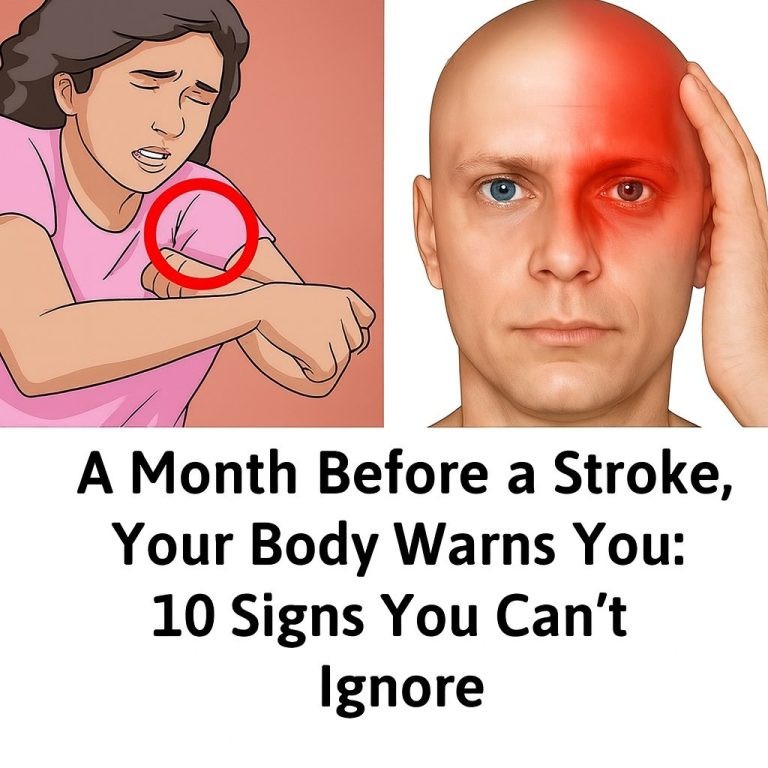
A stroke usually does not provide a predictable set of symptoms exactly one month beforehand. Claims that the body always gives warning signs weeks in advance can therefore be misleading.
However, some people experience a transient ischemic attack (TIA) before a stroke. A TIA produces stroke-like symptoms that may disappear within minutes or hours. It is still a medical emergency because it can signal a substantially increased risk of a future stroke, sometimes within days or weeks.
The most important thing is recognizing sudden neurological changes and acting immediately.
1. Sudden Weakness or Numbness on One Side
One of the classic warning signs is sudden weakness, numbness, or paralysis affecting:
one side of the face
one arm
one leg
or several areas on the same side
A simple clue is asking the person to raise both arms. If one arm drifts downward or cannot be lifted normally, emergency assessment is needed.
2. One Side of the Face Begins to Droop
Sudden facial weakness can make one side of the mouth or face appear uneven.
Ask the person to smile. If one side droops or feels numb, this may indicate a stroke or TIA.
Even if the face returns to normal after several minutes, the episode should not be dismissed.
3. Sudden Trouble Speaking
Stroke can affect the parts of the brain responsible for language.
A person may suddenly:
slur their words
use the wrong words
struggle to form sentences
speak in a way that does not make sense
be unable to speak normally
Ask them to repeat a simple sentence. Any sudden abnormality is a reason to seek emergency care.
4. Difficulty Understanding Other People
Sometimes the problem is not speaking but understanding.
A person may suddenly appear confused or have difficulty following a simple conversation or instruction.
Sudden confusion or difficulty understanding speech is a recognized stroke warning sign.
5. Sudden Vision Changes
Stroke or TIA may cause abrupt changes in eyesight.
Possible symptoms include:
blurred vision
double vision
partial loss of vision
loss of sight in one eye
loss of vision in both eyes
Because these changes can disappear after a TIA, some people mistakenly assume the danger has passed. It has not.
6. Sudden Loss of Balance
A person having a stroke may suddenly become unsteady or lose coordination.
They may:
stumble unexpectedly
have trouble standing
walk differently
feel unable to coordinate their movements
The American Stroke Association includes sudden balance loss in its B.E. F.A.S.T. stroke recognition method.
7. Sudden Severe Dizziness
Dizziness has many harmless causes, so dizziness alone does not necessarily mean stroke.
But sudden severe dizziness is more concerning when it occurs together with:
difficulty walking
loss of balance
double vision
weakness
numbness
speech problems
These combinations can occur with strokes affecting the back of the brain.
8. A Sudden Severe Headache
A sudden, unusually severe headache with no obvious explanation can be a warning sign of stroke, especially a bleeding-type stroke.
It becomes even more concerning when accompanied by:
vomiting
neurological weakness
confusion
vision changes
loss of consciousness
The key feature is often that the headache appears suddenly and is significantly different from the person’s usual headaches.
9. Sudden Trouble Walking or Coordinating Movements
Some strokes affect coordination rather than producing obvious paralysis.
A person might suddenly have difficulty:
walking in a straight line
reaching accurately for objects
controlling an arm or leg
maintaining normal coordination
These symptoms require urgent assessment, particularly when they appear abruptly.
10. Symptoms That Appear and Then Completely Disappear
This may be one of the easiest warning signs to overlook.
Someone can experience weakness, facial drooping, speech difficulty, vision loss, or another stroke-like symptom for several minutes and then feel completely normal again.
That may represent a TIA.
A TIA does not usually cause permanent brain injury, but it is a serious warning event. The American Stroke Association notes that many subsequent cardiovascular events occur within days or weeks after a TIA.
Remember B.E. F.A.S.T.
A useful way to remember the major warning signs is:
B – Balance: sudden loss of balance
E – Eyes: sudden vision changes
F – Face: one side droops
A – Arm: sudden weakness or numbness
S – Speech: slurred or unusual speech
T – Time: seek emergency help immediately
These symptoms should be treated as an emergency even when they disappear.
Why Waiting Can Be Dangerous
During a stroke, brain cells can begin to die within minutes because blood flow has been interrupted or bleeding has occurred.
Some treatments for ischemic stroke work best when given as quickly as possible. Eligible patients may receive clot-dissolving treatment within a limited treatment window, while certain patients with large-vessel blockages may be candidates for mechanical clot removal.
That is why waiting to “see if it gets better” can cost valuable treatment time.
Who Has a Higher Risk of Stroke?
Important risk factors include:
high blood pressure
diabetes
atrial fibrillation
cardiovascular disease
smoking
previous TIA or stroke
increasing age
Managing modifiable risk factors can substantially reduce stroke risk.
The Bottom Line
There is no reliable rule that your body will warn you exactly one month before a stroke.
The meaningful warning event is sometimes a TIA, and its symptoms can be brief enough to disappear before someone seeks help. That is precisely why sudden facial drooping, arm weakness, speech problems, vision changes, severe imbalance, or similar neurological symptoms should never be ignored.
If stroke symptoms appear, seek emergency medical care immediately—even if they disappear completely.
