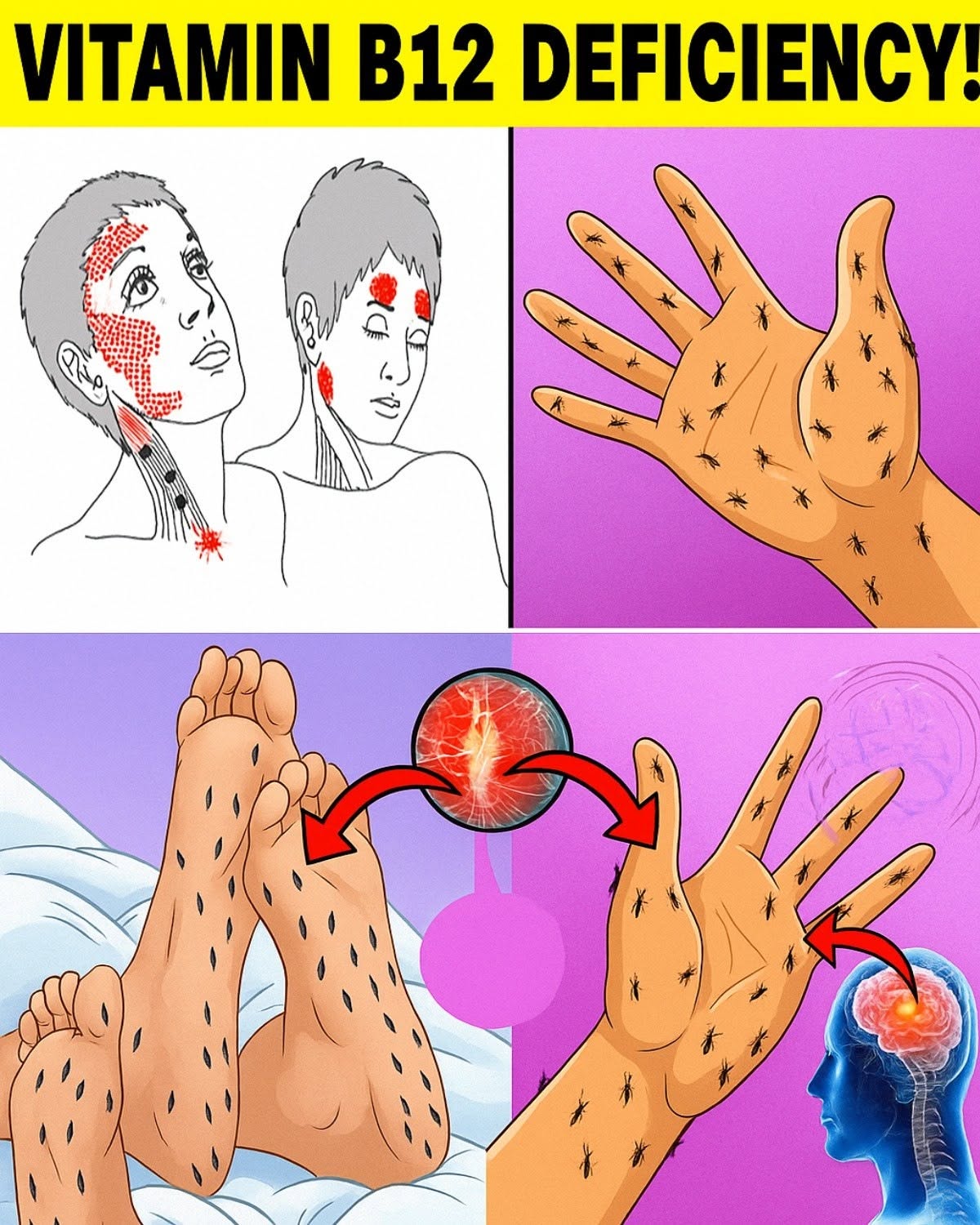
Vitamin B12 is a vital nutrient your body needs for healthy nerves, red blood cell production, DNA formation, energy metabolism, and brain function. When your level becomes too low, the symptoms can be easy to miss at first. You may feel tired, lightheaded, forgetful, low in mood, or notice strange tingling in your hands and feet.
The problem is that vitamin B12 deficiency can look like many other conditions. It can be mistaken for stress, aging, poor sleep, anemia, depression, nerve problems, or even early memory decline. That is why it should not be ignored, especially if symptoms continue or get worse.
A vitamin B12 deficiency can cause anemia and neurological symptoms. The NHS notes that B12 deficiency can lead to problems affecting the nervous system, including vision problems, memory issues, pins and needles, loss of coordination, and changes in the way you walk or move.
Vitamin B12, also called cobalamin, helps the body make healthy red blood cells. These cells carry oxygen around the body. B12 also supports the protective covering around nerves, which helps nerve signals travel properly.
When B12 levels are low, the body may not make enough healthy red blood cells. This can lead to vitamin B12 deficiency anemia. The National Heart, Lung, and Blood Institute explains that this condition develops when the body cannot make enough healthy red blood cells because it does not have enough vitamin B12.
But anemia is only part of the story. B12 deficiency can also affect the brain and nerves, and neurological symptoms can sometimes appear even before severe anemia is obvious.
1. Extreme Tiredness and Weakness
One of the most common symptoms of vitamin B12 deficiency is unusual tiredness. This is not just normal tiredness after a long day. It may feel like your body has no energy, even after rest.
You may feel weak, heavy, sleepy, or unable to do normal daily activities. This can happen because low B12 may reduce healthy red blood cell production, which can affect oxygen delivery.
Mayo Clinic lists fatigue and muscle weakness among symptoms that can happen with very low vitamin B12 levels.
2. Pale Skin or Feeling Lightheaded
Because vitamin B12 helps make healthy red blood cells, deficiency can lead to anemia. Anemia may make a person look pale or feel lightheaded, dizzy, weak, or short of breath.
Some people also notice a fast heartbeat or feel unusually tired during mild activity. These symptoms can also come from low iron, heart problems, dehydration, thyroid disease, or other causes, so blood testing is important.
If you feel faint, short of breath, or unusually weak, do not assume it is just aging or stress.
3. Tingling, Pins and Needles, or Numbness
Tingling in the hands, feet, legs, or arms is one of the most important warning signs of vitamin B12 deficiency. People often describe it as pins and needles, burning, crawling sensations, or numbness.
This happens because B12 is important for nerve health. If deficiency continues untreated, nerve symptoms may become more serious. The NHS lists pins and needles and problems with movement as neurological symptoms linked with vitamin B12 deficiency.
If tingling or numbness keeps returning, especially in both feet or hands, it should be checked.
4. Balance Problems or Trouble Walking
Vitamin B12 deficiency may affect coordination and balance. A person may feel unsteady, stumble more often, or walk differently. They may have trouble climbing stairs or feel less confident moving around.
The NIH Office of Dietary Supplements lists problems with balance among symptoms of vitamin B12 deficiency. It also notes possible depression, confusion, dementia, poor memory, and soreness of the mouth or tongue.
Balance problems can also be caused by inner ear issues, stroke, medications, vision problems, low blood pressure, or neurological disease. But because B12 deficiency is treatable, it is worth testing when symptoms appear.
5. Memory Problems or Brain Fog
Low vitamin B12 can affect thinking and mental clarity. Some people feel forgetful, slow, confused, or mentally foggy. They may struggle to focus, remember words, or keep track of tasks.
This can be frightening, especially in older adults, because it may be mistaken for dementia. But vitamin B12 deficiency is one of the health problems doctors may check when someone develops memory or thinking changes.
MedlinePlus notes there is no evidence that B12 supplements prevent or treat dementia in people who are not deficient, but B12 deficiency itself can cause serious symptoms and needs proper treatment.
6. Mood Changes, Depression, or Irritability
Vitamin B12 deficiency can also affect mood. Some people experience depression, irritability, anxiety, personality changes, or emotional instability.
Cleveland Clinic explains that vitamin deficiency anemia can cause depression, and severe vitamin B12 deficiency may cause confusion, forgetfulness, or personality changes.
Mood changes do not always mean B12 deficiency. They can come from stress, grief, sleep problems, depression, medication effects, or many other conditions. But when mood changes appear with fatigue, tingling, balance problems, or memory issues, B12 should be considered.
7. Sore Tongue or Mouth Problems
A sore, red, swollen, or smooth-looking tongue can be a sign of vitamin B12 deficiency. Some people also notice mouth ulcers, burning sensations, or discomfort while eating.
The NIH Office of Dietary Supplements includes soreness of the mouth or tongue among possible symptoms of vitamin B12 deficiency.
Mouth symptoms can also come from infections, irritation, dental problems, folate deficiency, iron deficiency, or other nutritional issues. A doctor or dentist can help identify the cause.
8. Vision Changes
Vitamin B12 deficiency can sometimes affect vision because of its role in nerve health. Some people may notice blurred vision or other visual changes.
The NHS lists vision problems as one of the neurological complications that may happen with vitamin B12 deficiency.
Any new vision changes should be checked promptly, especially if they are sudden, worsening, or occur with weakness, headache, confusion, or speech trouble.
9. Shortness of Breath or Heart Palpitations
When B12 deficiency causes anemia, the body may have to work harder to deliver oxygen. This can lead to shortness of breath, rapid heartbeat, palpitations, chest discomfort, or reduced exercise tolerance.
These symptoms should not be ignored, because they can also be signs of heart or lung problems. If chest pain, fainting, severe shortness of breath, or sudden weakness occurs, seek urgent medical help.
10. Digestive Problems
Some people with vitamin B12 deficiency may experience digestive symptoms such as nausea, loss of appetite, diarrhea, constipation, or weight loss. Mayo Clinic lists stomach problems among symptoms that can happen with very low B12 levels.
Digestive symptoms may also be linked to the cause of the deficiency. For example, some people cannot absorb B12 properly because of stomach or intestinal conditions, certain medications, or pernicious anemia.
Who Is More at Risk of Vitamin B12 Deficiency?
Some people are more likely to develop low B12. Risk is higher in older adults, people who eat little or no animal products, people with pernicious anemia, people who have had stomach or intestinal surgery, and people with digestive conditions that affect absorption.
The NHS notes that vitamin B12 and folate deficiency are more common in older people, affecting around 1 in 10 people aged 75 or over and 1 in 20 people aged 65 to 74.
People taking certain medications may also need monitoring. These may include metformin for diabetes and long-term acid-reducing medicines, depending on individual risk.
Why You Should Not Ignore Nerve Symptoms
Fatigue and mild anemia can often improve with treatment, but nerve-related symptoms deserve special attention. Tingling, numbness, balance problems, memory changes, and walking difficulty can sometimes become serious if deficiency is left untreated.
NICE guidance advises not delaying B12 replacement while waiting for test results in people with suspected megaloblastic anemia and neurological symptoms, especially when symptoms may suggest spinal cord involvement.
This does not mean you should self-treat with high-dose supplements without guidance. It means neurological symptoms should be taken seriously and evaluated promptly.
How Is Vitamin B12 Deficiency Diagnosed?
A healthcare professional may recommend blood tests to check vitamin B12 levels, blood count, folate, iron, and other markers depending on symptoms. Sometimes additional tests are needed to understand why the deficiency happened.
NICE explains that vitamin B12 deficiency can be hard to spot because symptoms are common in other conditions, and treatment may involve B12 tablets or injections depending on the cause and severity.
Do not rely only on symptoms or online lists. Testing helps confirm whether B12 deficiency is actually present.
Food Sources of Vitamin B12
Vitamin B12 is naturally found mainly in animal-based foods. Good sources include:
People who follow vegan or strict vegetarian diets may need fortified foods or supplements. If you do not eat animal products, ask a healthcare professional how to safely meet your B12 needs.
Treatment: Tablets or Injections
Treatment depends on the cause. Some people can improve with oral B12 supplements. Others need injections, especially when the body cannot absorb B12 properly.
The NHS says people with neurological symptoms such as numbness or tingling caused by B12 deficiency may need referral and injections every 2 months in some cases.
Never stop treatment early without medical advice. Symptoms may improve slowly, and follow-up may be needed.
When to Seek Medical Advice
Speak with a healthcare professional if you have ongoing tiredness, weakness, tingling, numbness, balance problems, memory issues, mood changes, sore tongue, vision changes, or unexplained anemia.
Seek urgent help if you have chest pain, fainting, severe shortness of breath, sudden weakness on one side, sudden speech trouble, severe confusion, or sudden vision loss.
Final Thoughts
Vitamin B12 deficiency symptoms can be subtle at first, but they should not be ignored. Fatigue, weakness, pale skin, tingling, numbness, balance problems, memory changes, mood changes, sore tongue, vision problems, palpitations, and digestive issues may all be signs that your body needs attention.
The good news is that vitamin B12 deficiency can often be treated once it is found. The key is not to guess. Get tested, find the cause, and follow medical guidance.
Disclaimer: This article is for general educational information only and does not replace medical advice, diagnosis, or treatment. If you suspect vitamin B12 deficiency or have neurological symptoms such as numbness, tingling, balance problems, or memory changes, speak with a healthcare professional.